
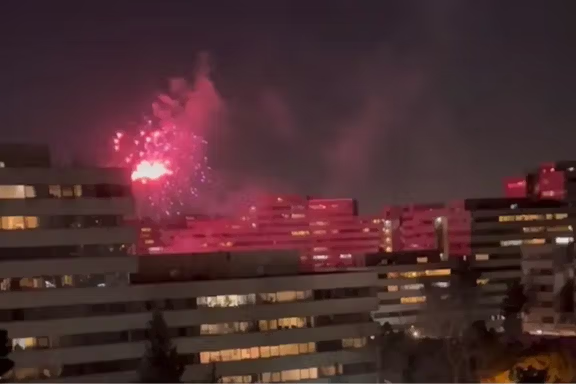
Cheering and Fireworks from Apartments in Iran Following Khamenei’s Death
The recent news of the death of Iran’s Supreme Leader, Ali Khamenei, has sent ripples through the nation. The reactions have been mixed, but one of the most notable responses was the celebration that erupted in various cities, marked by cheering and fireworks from apartments. This blog post delves into the significance of this event, the emotional responses of the Iranian populace, and the broader implications for the country’s future.
The Context of Khamenei’s Leadership
Ali Khamenei has held the position of Supreme Leader since 1989, succeeding Ayatollah Khomeini. His leadership has been characterized by strict adherence to Islamic principles and a firm stance against Western influences. Understanding Khamenei’s role is crucial to grasping the reactions to his death.
Political Landscape Under Khamenei
During his tenure, Khamenei oversaw significant events, including the 2009 Green Movement, which protested against alleged electoral fraud, and the increasing tensions with the United States. His leadership style has often been described as autocratic, with limited space for dissent.
The Day of the Announcement
On the day the news broke, the atmosphere in Iranian cities shifted dramatically. Many people took to their balconies and rooftops, expressing their feelings through cheers and the lighting of fireworks. This spontaneous celebration was a stark contrast to the expected mourning of a national leader.
Reactions Across Major Cities
In cities like Tehran, Isfahan, and Shiraz, residents celebrated with enthusiasm. Reports indicated that crowds gathered, chanting slogans and expressing their relief or joy over Khamenei’s passing. This reaction can be linked to years of frustration under his regime.
Understanding the Celebratory Response
To understand why many Iranians celebrated, it’s essential to consider the socio-political climate of the country. Over the years, dissatisfaction with the government has grown, fueled by economic struggles, human rights abuses, and a lack of political freedom.
The Role of Social Media
The role of social media cannot be underestimated in this context. Platforms like Twitter and Instagram became channels for Iranians to express their feelings and share videos of the celebrations. This digital outpouring illustrated a generational shift in attitudes toward the government.
What This Means for Iran’s Future
The death of Khamenei marks a pivotal moment in Iranian history. It raises questions about the future leadership of the country and the potential for political reform.
Potential Successors
As the nation contemplates Khamenei’s legacy, discussions about potential successors are underway. Key figures within the Iranian political structure, such as Ebrahim Raisi and Mohsen Rezaei, have emerged as possible candidates. However, the choice of a successor will significantly influence the direction of the country.
Public Sentiment and National Identity
The cheering and fireworks are indicative of a deeper public sentiment. Iranians are grappling with their national identity, particularly in the face of changing political dynamics.
The Youth Factor
Interestingly, much of the celebration was spearheaded by the youth of Iran, who have been at the forefront of calls for reform. This demographic is more connected to global cultures and ideas, leading to a significant generational divide in attitudes toward the government.
The International Reaction
Globally, reactions to Khamenei’s death have varied. Some countries have expressed hope for change in Iran, while others have taken a more cautious approach, wary of potential instability.
Implications for U.S.-Iran Relations
For the United States, Khamenei’s death could signal a potential shift in negotiations regarding nuclear arms and sanctions. Analysts are closely monitoring the situation, as the political landscape in Iran remains fluid.
Conclusion
The death of Ali Khamenei has ignited a complex tapestry of emotions across Iran, from jubilation to uncertainty. As celebrations erupted in urban landscapes, it became evident that this event transcends mere political change; it is a reflection of the hopes and frustrations of a nation at a crossroads.
Moving forward, the Iranian populace will continue to navigate their identity and aspirations in light of their leadership’s evolution. The cheers and fireworks symbolize not just a moment of relief but a potentially transformative chapter in Iran’s storied history.
Frequently Asked Questions
What was the immediate public reaction to Khamenei’s death?
Many Iranians celebrated with cheering and fireworks, reflecting a sense of relief and hope for change.
Why did some people celebrate Khamenei’s death?
Many viewed his leadership as oppressive, leading to years of dissatisfaction with the regime.
Who are the potential successors to Khamenei?
Key figures like Ebrahim Raisi and Mohsen Rezaei are among those speculated to be potential successors.
How has social media influenced the celebrations?
Social media allowed Iranians to share their reactions and connect with others, amplifying the celebratory atmosphere.
What are the implications for Iran’s future?
Khamenei’s death could lead to significant political changes and discussions about reform and national identity.