
Online transactions have revolutionized how we shop, pay bills, and manage finances, but security concerns often linger in users’ minds. This comprehensive guide dives deep into the multi-layered defenses that protect your money in the digital world, empowering you to transact with confidence.
Core Security Protocols
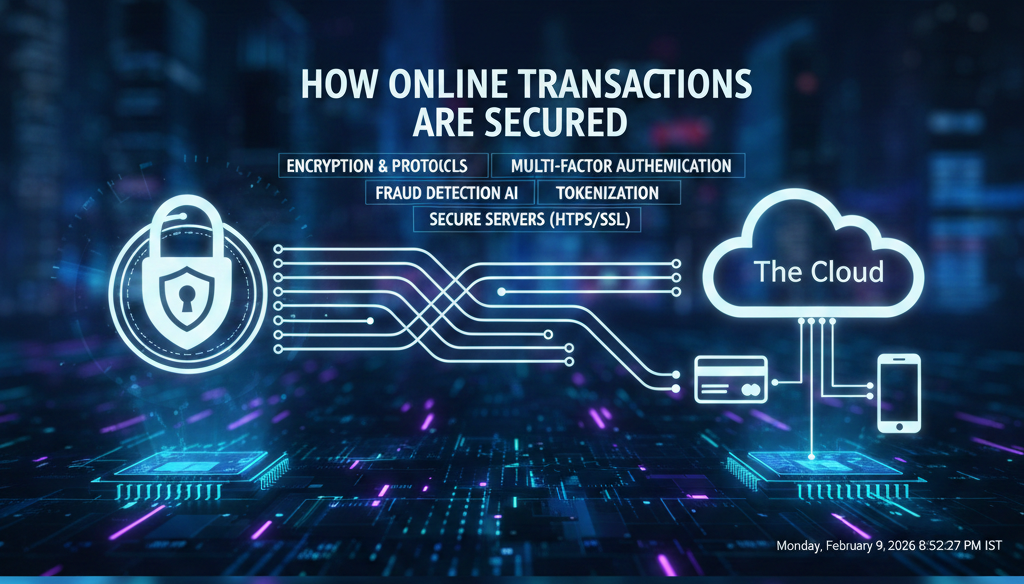
At the heart of every secure online transaction lies encryption, a mathematical process that transforms readable data into an unreadable format. Transport Layer Security (TLS), the modern evolution of Secure Sockets Layer (SSL), is the gold standard here. When you enter your credit card details on an e-commerce site, TLS kicks in immediately. It uses complex algorithms like AES-256 to scramble sensitive information—such as card numbers, expiration dates, CVV codes, and billing addresses—before it travels across the internet. Even if a cybercriminal intercepts the data packet using tools like packet sniffers, they face an insurmountable barrier: without the unique session key generated during the handshake process between your browser and the server, decryption is computationally infeasible, often requiring billions of years with current technology.
The TLS handshake itself is a marvel of cryptography. It begins when your browser connects to a secure site (noted by “https://” in the URL). The server sends its digital certificate, issued by trusted Certificate Authorities (CAs) like Let’s Encrypt or DigiCert, proving its identity. Your browser verifies this certificate against a list of trusted roots, then both parties negotiate a symmetric encryption key using asymmetric methods like RSA or elliptic curve cryptography. This hybrid approach combines the speed of symmetric encryption for bulk data with the security of asymmetric keys for key exchange. Once established, all data flows encrypted, preventing eavesdropping on public Wi-Fi networks, which are notorious hotspots for interception attempts.
Beyond TLS, payment gateways form another critical layer. Companies like Stripe, PayPal, or Razorpay act as intermediaries, ensuring merchants never directly handle raw card data. Instead, the gateway tokenizes the information—replacing it with a unique, non-sensitive identifier—and forwards only what’s necessary for authorization. These gateways must comply with the Payment Card Industry Data Security Standard (PCI DSS), a rigorous framework with 12 core requirements spanning network security, access controls, and regular vulnerability scans. Non-compliance can result in hefty fines or loss of processing privileges, incentivizing top-tier protections. For instance, Level 1 PCI compliance, the highest tier for processors handling over 6 million transactions annually, demands quarterly external audits and continuous monitoring, creating a robust ecosystem where breaches are rare and swiftly contained.
Authentication Layers
Simple passwords are relics of the past; modern authentication demands multi-factor verification to thwart credential-stuffing attacks, where hackers use leaked passwords from one breach against countless sites. Two-Factor Authentication (2FA), also known as Multi-Factor Authentication (MFA), requires something you know (password), something you have (phone or hardware token), or something you are (biometrics). In practice, when you confirm a purchase, banks send a One-Time Password (OTP) via SMS, email, or authenticator apps like Google Authenticator. These OTPs expire in minutes, rendering stolen ones useless. Push notifications to banking apps take it further, requiring a simple tap on your device after biometric unlock.
Biometrics elevate this further by leveraging unique physiological traits. Fingerprint scanners on smartphones use minutiae points—ridge endings and bifurcations—to create a mathematical template stored securely in hardware enclaves like Apple’s Secure Enclave or Android’s Titan M chip. Facial recognition, powered by neural networks, analyzes over 30,000 facial nodes, achieving sub-1% false acceptance rates in controlled tests. These methods resist spoofing; advanced systems detect liveness via eye blinks or pulse detection using infrared sensors. For high-value transactions, behavioral biometrics add invisible layers—analyzing typing rhythm, mouse movements, or swipe patterns—to flag anomalies without user friction.
Tokenization deserves its own spotlight. Unlike encryption, which can be reversed, tokenization permanently maps sensitive data to a random surrogate value. Picture this: your Visa card “1234-5678-9012-3456” becomes “abcd-efgh-ijkl-mnop” on the merchant’s server. Only the token vault, maintained by the issuer or processor, holds the detokenization key. This vault is air-gapped, segmented, and encrypted at rest with FIPS 140-2 standards. If a merchant’s database is hacked—as in the 2013 Target breach where 40 million cards were exposed—attackers get worthless tokens. Dynamic tokenization rotates these values per transaction or session, adding ephemerality.
Identifying Safe Sites and Platforms
Spotting a secure site starts with basics but extends to vigilant habits. The HTTPS protocol isn’t optional; browsers like Chrome now mark HTTP pages as “Not Secure,” especially those requesting logins or forms. The padlock icon and green address bar confirm an active TLS connection—click it to view certificate details, ensuring it chains to a reputable CA without expiration or revocation flags via OCSP stapling.
Trust signals abound on legitimate platforms. Look for Verified by Visa, Mastercard SecureCode (3D Secure), or PCI badges, which indicate enrollment in liability-shift programs. These protocols add an ISP-authenticated layer for card-not-present transactions, shifting fraud liability from merchant to issuer. Hover over hyperlinks to reveal true destinations; discrepancies scream phishing. Bookmark frequently used sites instead of searching anew, as typosquatting domains (e.g., amaz0n.com) mimic giants to harvest credentials.
Mobile apps demand scrutiny too. Download only from official stores like Google Play or Apple App Store, which vet for malware. Check permissions—legitimate banking apps don’t need camera access for payments—and review user ratings for patterns of fraud complaints. Sideloading APKs bypasses this, inviting trojans like the 2025 wave of Joker malware targeting Indian UPI apps.
Advanced Fraud Detection Systems
Behind the scenes, machine learning drives proactive defense. Banks deploy neural networks trained on billions of transactions to score risk in milliseconds. Features include velocity checks (e.g., five $100 buys in an hour), geolocation mismatches (your card used in Surat but IP from Nigeria), and device fingerprinting (browser version, screen resolution, installed fonts). Anomalies trigger soft declines, 3DS challenges, or velocity holds. Explainable AI ensures transparency, allowing quick overrides via app.
Rule-based systems complement ML: absolute limits ($5,000 daily), time windows (no transactions 2 AM-5 AM), and merchant blacklists. Velocity rules cap attempts, thwarting brute-force probes. Post-transaction, SIEM tools correlate logs for patterns like card-testing attacks, where bots probe validity en masse.
Endpoint security fortifies your side. Endpoint Detection and Response (EDR) agents monitor for keyloggers, screen scrapers, or form grabbers. Next-gen antivirus uses sandboxing to detonate suspicious files virtually. Regular OS patches seal exploits like Log4Shell, while VPNs tunnel traffic over encrypted channels, masking your IP from snoopers.
User Best Practices for Ironclad Protection
Empowerment starts with hygiene. Generate passwords exceeding 16 characters, mixing symbols, numbers, and cases—use managers like Bitwarden or LastPass for autofill without typing. Enable 2FA universally, preferring app-based TOTP over SMS to dodge SIM-swapping scams.
Device discipline matters: lock screens with PINs or biometrics, avoid public Wi-Fi sans VPN, and employ virtual keyboards for inputs to evade hardware keyloggers. Incognito mode prevents cookie-based session hijacking; extensions like uBlock Origin and HTTPS Everywhere automate defenses.
Payment habits minimize exposure. Favor credit over debit for zero-liability policies—dispute timelines extend 60-120 days. Virtual cards from issuers like Capital One generate burner numbers expiring post-use. Digital wallets (Google Pay, Apple Pay) tokenize at the device level via Host Card Emulation, never sharing PANs. For guest checkouts, one-click options like PayPal shield details.
Public PC pitfalls: never transact—keyloggers persist. Clear histories post-use, but better yet, use mobile for control.
Emerging Threats and Countermeasures
Phishing evolves relentlessly. Spear-phishing crafts personalized lures via social media reconnaissance; vishing adds voice deepfakes mimicking bank reps. Defend with URL scanners (VirusTotal), email header forensics, and zero-trust: contact banks via official apps only.
Man-in-the-Middle (MitM) attacks proxy sessions; TLS 1.3 mitigates with 0-RTT resumption and encrypted SNI. Certificate Transparency logs public issuances, exposing rogues.
Ransomware encrypts devices—rising 150% yearly—demanding offline backups (3-2-1 rule: 3 copies, 2 media, 1 offsite). Supply-chain attacks like SolarWinds inject malware upstream; vet vendors rigorously.
Cryptojacking mines coin covertly; browser extensions now detect WebAssembly anomalies.
Secure Payment Methods Breakdown
| Method | Key Security Features | Best For | Limitations |
|---|---|---|---|
| Credit Cards | Chargebacks, 3DS, EMV chips | High-value buys | Overspending risk |
| Debit/UPI | Real-time OTP, Virtual IDs | Daily India txns | Direct account drain |
| Digital Wallets | Device tokenization, Biometrics | Mobile speed | Wallet breaches expose linked cards |
| BNPL (Affirm) | Soft credit checks, No interest traps | Installments | Debt accumulation |
| Crypto | Blockchain immutability | Borderless | Volatility, irreversibility |
Credit edges out for recourse; UPI shines in India with NPCI’s AFA limits and biometric mandates.
Regulatory Frameworks Worldwide
PCI DSS unifies card security globally, but regions tailor rules. EU’s PSD2 mandates Strong Customer Authentication (SCA), curbing 70% fraud. India’s RBI enforces 2FA for ₹5,000+ txns, UPI PINs, and white-listing merchants. US CFPB oversees disputes; GDPR fines data mishandlers up to 4% revenue.
Audits, breach disclosures (72 hours), and interoperability standards foster trust.
Future-Proofing Transactions
Quantum computing looms, cracking RSA via Shor’s algorithm—enter post-quantum crypto like lattice-based Kyber. Passkeys (FIDO2) bind credentials to devices, phishing-proof.
Zero-Trust Architecture assumes breach, verifying continuously. Blockchain’s distributed ledgers (e.g., JPM Coin) eliminate intermediaries. Federated learning trains fraud models collaboratively sans data sharing.
Embedded finance weaves payments into apps seamlessly, with confidential computing (Intel SGX) processing in enclaves.
Central Bank Digital Currencies (CBDCs) like digital rupee promise programmable money—expiry dates, geo-fencing—for controlled security.
Conclusion: Your Role in the Chain
Security is a chain; weakest links fail it. Layer defenses, stay vigilant, and report anomalies promptly. With these protocols, online transactions rival cash safety—and exceed it in convenience. Transact boldly; the system’s got your back.